
Thoughtful zoning
Hygienic zoning and color-coded tools help organize cleaning practices and manage cross-contamination risks.
FOOD PLANT SANITATION
Food safety is a priority on your production floor. We shape cleaning and sanitation around your equipment, production schedule, and facility procedures, with clear responsibilities and supporting records.
Discuss your sanitation needs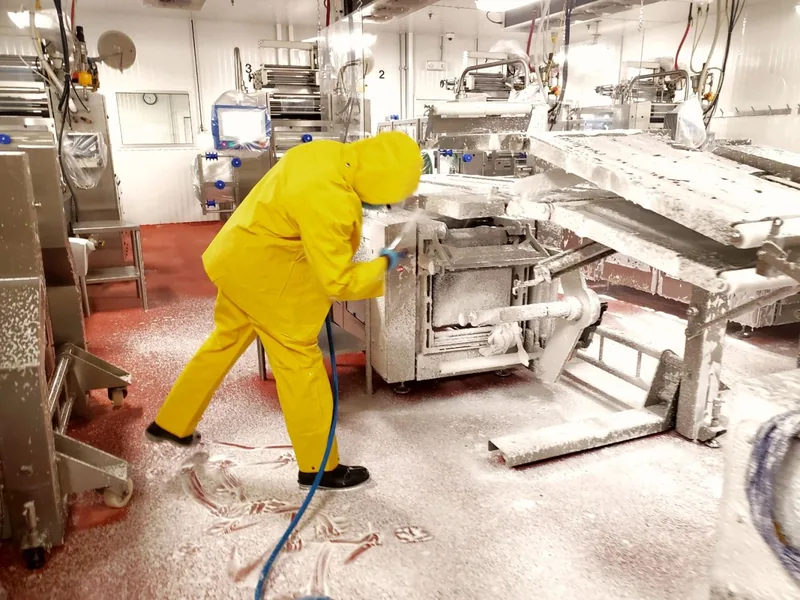
Your facility’s procedures and production requirements guide the work—not a one-size-fits-all checklist.
Hygienic zoning and color-coded tools help organize cleaning practices and manage cross-contamination risks.
Master sanitation schedules and sanitation standard operating procedures define routine and periodic tasks.
Directly employed cleaning teams work within the facility’s agreed procedures and scope.
ON THE PRODUCTION FLOOR
See equipment washing and hands-on cleaning in a food manufacturing environment.
50-second overview · No audio
FROM SOIL REMOVAL TO PRODUCTION READINESS
A clear sequence connects cleaning, inspection, sanitizing, and verification—so every stage has a purpose.
Remove loose product, packaging, scrap, and heavy soil with approved tools. In areas where water must be avoided, use the facility’s approved dry-cleaning method.
Where wet cleaning is appropriate, remove remaining loose soil using approved water conditions and methods. Control spray to avoid spreading contamination or damaging equipment.
Use the approved cleaner and the right tools for the soil and surface. Follow product directions and apply mechanical action to reach food-contact and adjacent surfaces.
Remove loosened soil and cleaning residues as directed by the product label and the facility’s sanitation procedure. Rinse requirements depend on the method and product.
Check equipment and the area for remaining soil, residue, pooling water, or damaged surfaces before sanitizing. Reclean any surface that does not meet the facility’s cleanliness criteria.
Apply the approved sanitizer or sanitizing method to clean surfaces. Follow the required concentration, coverage, contact time, and other product-label and facility conditions.
Coordinate the facility-required pre-operational inspection, verification, and records with its food safety team. Address deficiencies before the facility’s authorized release for production.
This framework is adapted to your approved sanitation standard operating procedures (SSOPs), equipment, and production environment. Step names, sequence, and verification methods may vary. Scope and responsibilities are agreed with your quality and food safety team.
CLEAR EXPECTATIONS
We confirm cleaning methods, chemical selection, verification responsibilities, and any exclusions during scoping. Sanitizer and disinfectant use must follow the applicable product-label directions and facility procedures.
COMMON QUESTIONS
We discuss your production windows and cleaning requirements during the walkthrough, then define the service schedule in your proposal.
We discuss master sanitation schedules, SSOPs, and the cleaning records your facility requires. The proposal defines the documentation and responsibilities included.
No. Cleaning and sanitation support your facility’s food safety program. Your quality and food safety team retains its agreed oversight and release responsibilities.
Start with your facility, equipment, and priorities.